5 steps to build income, freedom and a safety net
Read time: 5 minutes
People say it’s risky to start a business.
Even today, the status quo is to follow the traditional path: join an organisation and work your way up the ladder. Maybe switch roles internally, or move companies for a better salary.
For years, I followed the that path, pouring everything into each role. As a doctor in some of the busiest London hospitals, and later in my corporate job at a consulting firm, it was the norm to:
-
Work very long hours.
-
Miss time with my family.
-
Deprioritise my own wellbeing.
And it was the same for many others in my position. But despite the commitment, loyalty, and long hours, what sticks in my memory are the frequent feelings of:
-
Disillusion
-
Discontentment
-
Lack of appreciation
My income depended on my employer. My growth depended on my employer. There was little energy left after work, and a feeling of being stuck. It’s one of the reasons I left my medical career.
On top of this, I frequently get messages like this one:
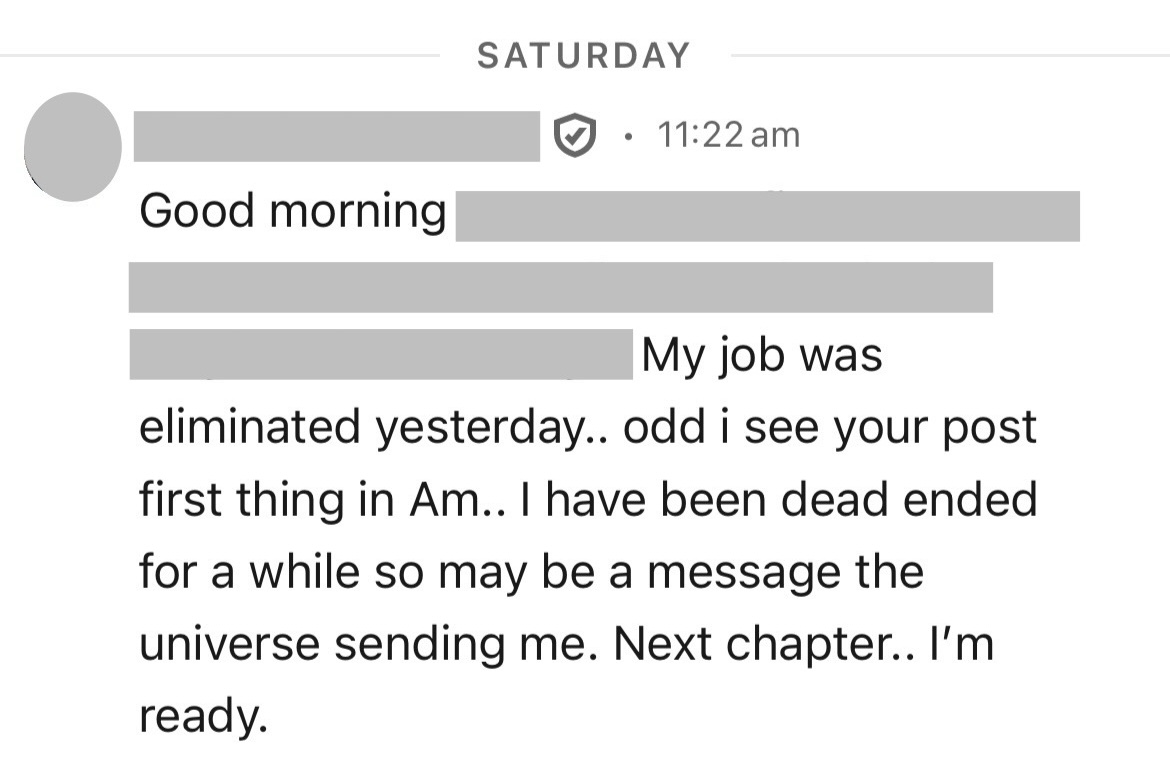
People give their all to an employer, investing energy and years of hard work, only to be unexpectedly laid off. Industries are evolving fast, roles are being automated, and job security is no longer guaranteed—because a business will always prioritise its own survival over an individual.
So my view is that building something of your own might now be the less risky path. Perhaps starting a business is a safer bet than putting all your eggs in one basket...
Not everyone should aim to build the next Amazon or Facebook. But I do believe that having a small business or side hustle—something that earns independently of your 9–5—is a smart move.
Here are five actionable steps you can take to explore this path, no matter where you are now:
1. Talk to people
Have conversations—with friends, former colleagues, or contacts—to see what problems they’re facing. It’s customer development: figuring out where your skills meet someone else’s pain point. If you’ve ever coached, mentored, or trained someone, think about why your help worked. Often there’s an offering hiding there...
2. Build attention and an audience
Sharing what you know is the fastest way to build trust. Industry insights, lessons learned, tips or frameworks—it all shows credibility and helps people see how you think. When you’re consistently visible, people are more likely to come to you with opportunities. (And if you want help figuring this out, get in touch!).
3. Build an asset outside work
These days I think everyone should have something they own, a body of work, that lives outside their 9-5 role. It could be a newsletter, podcast, YouTube channel, or digital product. These assets compound over time and give you leverage. If something happens with your day job, it might give you a plan B.
4. Start small and test fast
People often feel overwhelmed, thinking they need a long-term plan. But as with everything, starting small is the way, e.g. a one-hour workshop or a short guide or template people would pay for. It can give you feedback, confidence, and some momentum. I’ve learnt that you learn more by doing than by endless planning!
5. Learn skills that translate
There are some skills that have near-universal value: copywriting, sales, video editing, coding for example. Picking just one thing to improve can broaden your options and increase earning potential. Choosing somethin that aligns with your interests and improving by even 1% a week adds up over time.
In summary
The world has changed, and what was once risky is now arguably the safer long-term play. You don’t have to go all in, but taking small steps to build something on your own terms can give you freedom and resilience.
The question is: what’s really the riskier move—waiting for someone else to give you permission, or building something that’s truly yours?
Hope that helps!
Speak soon,
Dupe
PS: Whenever you're ready, feel free to enquire about working together: Get guidance on how to be more visible and grow your brand. Whether you need 1:1 coaching or ready-to-post content, hit reply and let’s chat!
And if you' like to book me to speak make an inquiry here :)
