How to decide which opinions actually matter
Read time: 6 minutes
Earlier this week, I shared a post on LinkedIn that resonated with so many people.
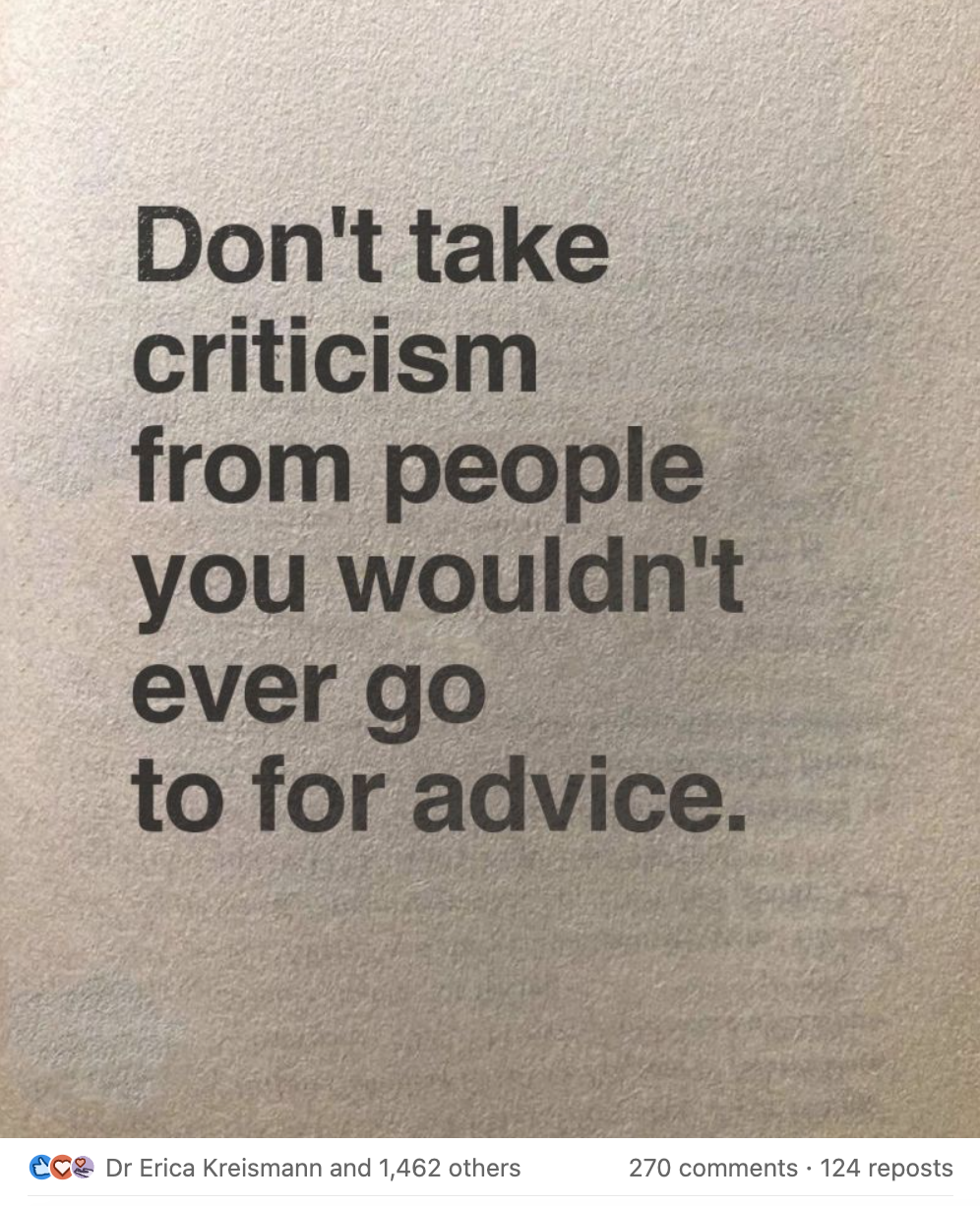
The post itself came from a moment recently where I received some criticism about a decision I’d made — and it rattled me.
The comment wasn't particularly constructive, nor was it from a place of real understanding. And yet, it stuck with me longer than I’d like to admit.
What surprised me wasn't the criticism itself; it was how much headspace I let it take up.
It got me thinking about why certain opinions affect us so deeply, and how easy it is to give the wrong voices too much weight.
Here’s what I’ve learned.
1. Visibility invites opinion, whether you ask for it or not
The more visible you are, the more opinions you attract. It’s part of the deal.
If you share content, build a brand, take on investors, or put your work out into the world, people will comment. Some will be thoughtful. But others will project their own fears and frustrations onto what you’re doing.
None of this means you’re doing something wrong.
Learning to tolerate opinion is a skill we should all work on cultivating.
2. Criticism hurts most when it touches an insecurity
I'll be honest: the reason that comment bothered me was because it brushed up against a doubt I already had. Something I was still working through myself.
I’ve noticed that criticism often grates when it echoes something unresolved inside us. That’s why two people can say the same thing, and only one of them gets under your skin.
Noticing that pattern helps you respond with more perspective.
3. Not all feedback comes from a place of understanding
Some people criticise from experience. Others from distance.
They don’t see the trade-offs you’re making, or carry the responsibility of the outcome. And they’re not the ones who have to live with the consequences either way. That doesn’t make them bad people. But it does mean their opinion deserves less weight.
Before internalising feedback, it’s worth asking whether it’s informed and relevant.
4. A simple filter changes everything
I’ve started using a few questions to decide whether criticism is worth engaging with:
-
Would I go to this person for advice?
-
Do they understand the full context of what I’m doing or building?
-
Are they speaking from experience, or from opinion?
-
Would I actually trade places with them?
If the answer is no, it’s usually just noise. It doesn’t take away the discomfort, but it does give you back a sense of control.
5. Asking fewer people for input is often healthier
One mistake I’ve made in the past is asking too many people for their thoughts. It creates confusion, slows decisions, and brings doubt. Especially when the people you’re asking don’t share your values or long-term goals.
Being selective about who you invite into your decision-making process is important.
Not everyone needs a seat at that table.
6. You don’t owe everyone an explanation
This one took me a while to learn.
You don’t need to justify your choices to people who aren’t invested in the outcome. Explaining yourself endlessly is draining, and rarely changes people’s minds.
Sometimes the best response is no response at all. And letting time pass helps you see things more clearly than reacting in the moment.
7. Building a brand means building discernment
If you’re building a personal brand, writing content, or sharing your thinking publicly, this becomes even more important.
Visibility makes you feel exposed and opens you up to judgement. And if you’re not careful, it can take you off course. Learning which opinions to listen to, and which to let pass, is part of the process.
It’s not about being closed off, it’s about being selective.
The takeaway
Not all criticism is worth listening to.
Some of it is useful. Some of it is well-intentioned. And some of it is just noise.
The skill isn’t ignoring feedback altogether. It’s learning how to be discerning and filter it appropriately.
Speak soon,
Dupé

PS: If you’d like deeper support in showing up confidently and growing your personal brand, reply to this email to explore 1:1 coaching or ready to post content. And if you' like to book me to speak make an inquiry here
